


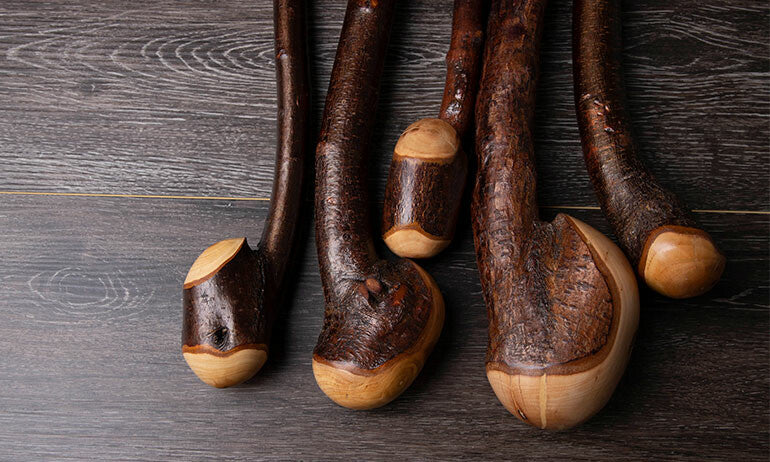
A blackthorn shillelagh is a traditional Irish walking stick made from the dense wood of the blackthorn plant. Recognizable by its dark bark, natural knots, and thorn marks, it has a long connection to Irish countryside life and craftsmanship. Walking-length sticks and shorter collector pieces share this heritage, but serve different purposes.
“And it was then, as I am told, that St. Patrick came, walking through the land, bearing a blackthorn stick with a knob on the top of it, and every step he made was followed by a shower of shamrocks.”
Much of its appeal comes from the wood itself. A blackthorn stick keeps the bends and markings of the branch it grew from. Its irregular shape and contrasting colors make it an interesting object to examine, whether you carry it, display it, or give it to someone who values Irish heritage.
What is a blackthorn shillelagh?
An Irish shillelagh is a traditional stick associated with walking, folklore, and the history of Irish stick fighting. Blackthorn is one of the woods most closely connected with this tradition. The plant, Prunus spinosa, produces dense wood and grows with sharp thorns along its branches.
The terms “shillelagh,” “walking stick,” and “cane” sometimes overlap in product names, but length and intended use matter. A short shillelagh is different from a full-size walking cane. If you want walking support, check the individual model rather than relying on its name.

The history of the blackthorn Irish walking stick
Irish walking sticks have long been connected with travel through the countryside, rural life, and traditional stick-making. A shillelagh also has a place in Irish folklore and the history of stick fighting. These overlapping uses help explain why the same object can be remembered as a walking companion, a stout fighting stick, or a symbol of Irish identity.
From hedgerows and field boundaries
Blackthorn has a long connection to countryside hedges and field boundaries. Its dense, thorny growth makes a useful natural barrier, helping separate land and keep livestock within grazing areas. It is the sort of plant you might associate with old farm boundaries rather than neatly milled timber.
That rural setting helps explain the character of an Irish blackthorn walking stick. The material begins as a naturally growing branch, with its own curves and knots. A stick maker chooses suitable wood and prepares it while preserving the features that make it recognizable.
Today, the blackthorn shillelagh is often appreciated as a heritage walking stick, a collector's piece, or an Irish keepsake. Its connection to the countryside remains visible in the bark and shape of the finished wood.
Why blackthorn walking sticks can be hard to source
Finding blackthorn is only the beginning. A maker needs a piece with the right length, thickness, and shape for the intended stick. Not every branch growing in a hedge will become a well-proportioned walking cane.
Harvesting also takes care. Blackthorn grows in dense tangles with very sharp thorns, making it difficult to reach and handle suitable branches. It takes a patient maker willing to work with that awkward material. Finding people with the experience and willingness to harvest it is part of the sourcing challenge.
The work continues after harvesting. Wood must be seasoned and prepared before it becomes a finished stick. Selecting a branch, working with its natural shape, and finishing the surface takes time and skill. The maker has to preserve the features that give blackthorn its character while preparing it for its intended use.
This helps explain why finished blackthorn canes may be available in limited quantities or why a particular style sells out. The practical challenge is sourcing suitable wood and getting it prepared by experienced makers. Limited finished-stick supply is not the same as saying the plant itself is endangered.
What happens to the thorns?
The sharp thorns on a living blackthorn plant are removed or trimmed down during stick-making. The maker can retain the characteristic bumps and marks while preparing the surface of the finished stick. Those rounded features are part of its appearance, not the long, sharp thorns found on a growing hedge.
That is why a finished stick can show a trail of small bumps or brown markings against darker bark. They record where thorns and growth points once formed. The natural pattern remains even though the sharp projections have been worked down.
Dark bark, brown markings, and individual character
Blackthorn often has dark brown, reddish-black, or nearly black bark. Lighter brown areas and small marks where thorns once grew create contrast along the shaft. Knots, bends, and changes in thickness add to the natural appearance.
No two genuine blackthorn sticks look exactly alike. Even sticks made to a similar length can differ in grain, handle shape, and surface texture. That variation is a reason to choose blackthorn: you are selecting a piece with its own character.
This is also what separates genuine blackthorn from a manufactured replica with a similar outline. A replica can imitate the style, but a natural shaft carries the irregular markings of the plant it came from. A genuine blackthorn shaft may still be paired with a handle made from another wood or material.
Rustic and polished blackthorn styles
A rustic finish emphasizes the bark texture, knots, and uneven outline. It suits shoppers who want the look of a traditional country stick. Polished designs bring a smoother, more refined appearance while still showing the wood's natural markings.
For example, a polished blackthorn Derby cane combines a blackthorn shaft with a separate maple handle and brass collar. It shows how the same natural material can be used in a more refined cane design as well as a traditional knob-handle shillelagh.
Neither look is automatically better. Choose rustic texture if the branch's natural character appeals to you, or a polished style if you prefer a more finished accessory.
A walking stick and symbol of Irish pride
For many people, the meaning of a shillelagh is as important as its appearance. It can recall Irish ancestry, a family connection, or time spent in Ireland. Others appreciate it simply as a piece of traditional woodworking with a recognizable history.
You do not need Irish ancestry to appreciate the craftsmanship. Walking-stick collectors and people who enjoy natural woodworking can find just as much interest in the shape, finish, and history of an individual piece.
As a souvenir or keepsake, its value comes from that connection and from the individuality of the wood. A natural stick can be remembered for a particular bend, a rounded handle, or an unusual pattern of thorn marks.
From Irish keepsake to popular culture
The shillelagh appears in popular culture too, including films such as Gangs of New York. These appearances have helped make its shape familiar beyond Ireland. A film portrayal is only one part of the story, though; the tradition also belongs to everyday countryside walking and generations of stick-making.
Giving a blackthorn shillelagh
When choosing a gift, decide whether the recipient wants a walking-length cane or a shorter display piece. That distinction is more useful than simply picking the most elaborate handle.
Using a blackthorn walking stick
The dense wood and substantial feel are part of blackthorn's appeal as a walking-stick material. A traditional stick also brings a different appearance from a plain metal cane, with natural texture and a shape that reflects its origin.
For walking assistance, suitability depends on the finished stick, its size, and the individual user. A short collector shillelagh is not a substitute for a properly sized walking cane. Length, handle comfort, and the maker's stated specifications matter more than how rugged the wood looks.
How to choose an Irish walking stick
- Decide on its purpose. Choose between walking support, collecting, display, or a heritage gift.
- Check the length and handle. For walking use, confirm the sizing and choose a handle shape that suits the user.
- Read the specifications. Review the listed weight, shaft material, rubber tip, and any published user-weight rating.
- Compare the finish. Decide whether you prefer natural bark texture, a polished shaft, or a contrasting handle.
Customer Impressions
“I have been using the Blackthorn Shillelagh Walking Cane for several months and am impressed with its durability and strength. It has helped me feel more confident walking, and I highly recommend it to anyone looking for a reliable and stylish walking aid.” – John, 62
“I purchased the Blackthorn Shillelagh Walking Cane for my father, and he loves it. He likes the sturdy feel, the traditional look, and the Irish heritage behind it. I would definitely recommend this cane to anyone looking for a high-quality walking stick.” – Sarah, 35
Caring for a blackthorn walking stick
Follow the care instructions for your particular stick. A soft cloth can remove surface dust; avoid soaking the wood or leaving it beside a heater. Store it in a dry place away from prolonged heat and direct sunlight.
For a stick used while walking, inspect the shaft and handle for damage and check the rubber tip for wear. Follow the maker's guidance for the finish rather than applying an unfamiliar polish or treatment.
A natural stick with a story behind it
The enduring appeal of a blackthorn Irish walking stick is easy to understand when you look closely at one. Dark bark, lighter thorn marks, and a naturally shaped handle connect the finished object to the branch it once was. Skilled preparation preserves that character in a stick that can be carried, collected, or kept as a reminder of Irish heritage.
See the different blackthorn walking-stick styles
Our collection includes traditional shillelaghs and walking-length designs. Check each listing for its material and intended use.

Elizabeth Carroll
Elizabeth Carroll is dedicated to designing statement pieces that blend elegance with daily support. She excels at building meaningful customer relationships and has played a vital role in fostering deep brand loyalty. Elizabeth loves helping customers embrace their individuality with confidence and grace. Have a question or a cane story to share? Reach out to her personally at Elizabeth@fashionablecanes.com!


