


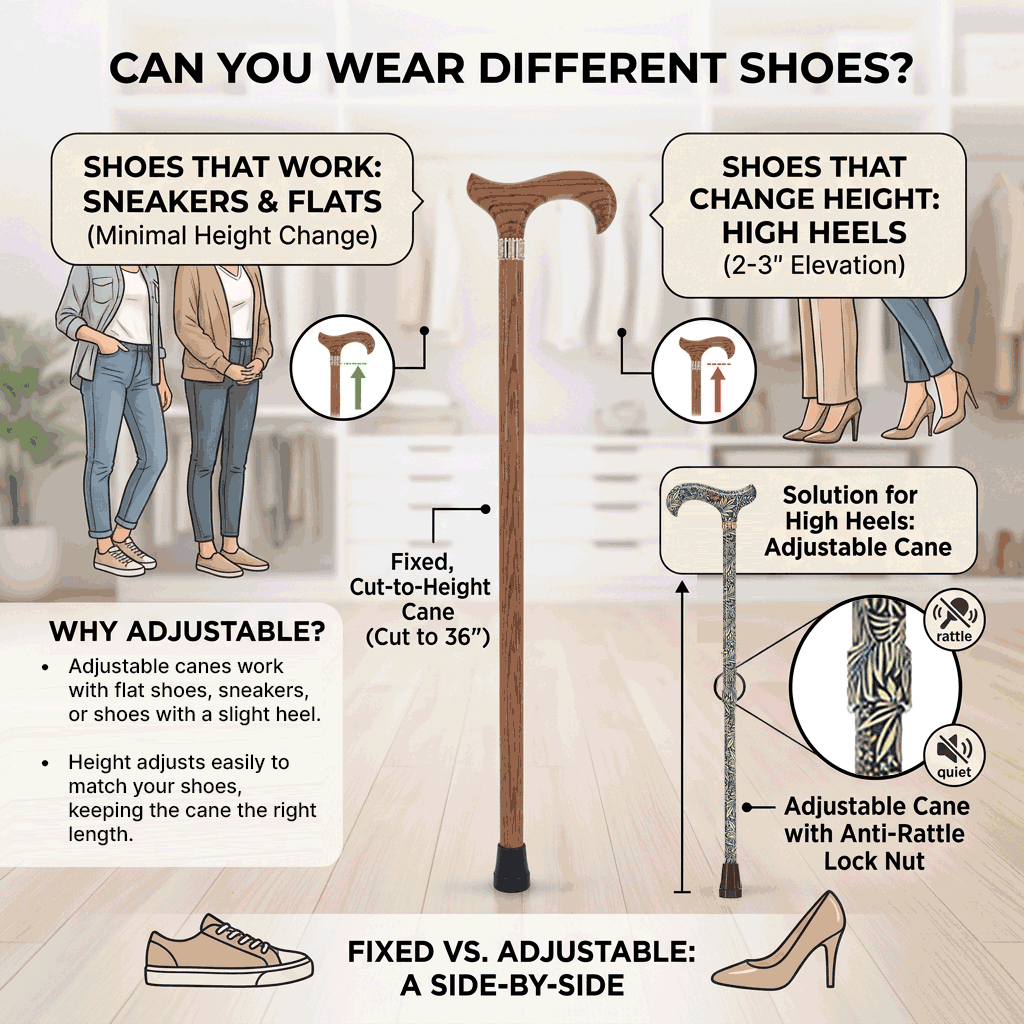
If you're wondering whether your cane needs to change height depending on what shoes you're wearing, here's the honest answer: for most people, no, not really. Shoe height only becomes a real factor if you're wearing high heels regularly, or if you're just genuinely sensitive to small changes in your cane's height. Most people aren't.
When shoe height actually matters
The main case where it comes up is women who wear high heels somewhat often. A couple inches of heel changes your standing height enough that it can throw off how a cane fits, so if that's a regular part of your wardrobe, it's worth thinking about. Some people keep a separate cane sized for their heels. Others just go with an adjustable cane so they can raise or lower it depending on what they're wearing that day.
Outside of that, the difference between sneakers, boots, dress shoes, or slippers is usually small enough that it doesn't meaningfully change how the cane feels or functions.
Don't forget the tip and base height when sizing
One detail that's easy to overlook: your cane's overall height isn't just the shaft. A standard rubber cane tip typically adds about a half inch, and if you use a stand-up cane base instead, that's usually closer to three quarters of an inch, sometimes a full inch. These aren't exact across every product, but they're close enough to matter. If you follow the proper steps in our sizing guide, this gets accounted for automatically, but it's worth keeping in mind, especially if you're switching from a standard tip to a stand-up base later on, since that alone can shift your effective height enough to notice.
Why we still recommend a cut-to-height cane over adjustable, even though it seems less flexible
Here's something most people don't think about until they've lived with it: adjustable canes rely on a locking mechanism, and even a well-made one can develop a little play over time. We use an anti-rattle lock nut on our adjustable canes, and it does a good job, but after enough use and tightening cycles, most adjustable canes eventually pick up a faint clicking sound as you walk. If you've ever been near someone using an older adjustable cane, you've probably heard it. It's a small thing, but it's also one of the most common complaints we hear, and once you notice it, it's hard to un-notice.
A fixed, cut-to-height cane doesn't have that problem, because there's no adjustment mechanism to loosen in the first place. That's why, for daily use, we generally recommend getting your cane custom cut to your exact height rather than relying on an adjustable one, even though adjustability feels like the safer choice on paper.
We offer free custom sizing down to the half inch (a lot of cane companies only size to the nearest full inch), and we ship same day, so there's no real downside to getting it cut to your actual height instead of guessing.
What happens if your cane is the wrong height
Worth saying plainly: most people don't actually go back and get their cane resized if it's off. They just get used to it. We see it constantly, someone's using a cane that's an inch too tall or too short, and instead of fixing it, they adapt to it over months or years. If it's too short, that usually means bending forward more to reach it, which over time can affect posture. It's not dangerous in the way an unstable cane is, but it's not doing you any favors either, and it's an easy problem to avoid from the start.
The bottom line
If your footwear varies a lot day to day (especially with heels), an adjustable cane makes sense. If you wear roughly the same type of shoe most days, which is true for most people, a cane custom cut to your height will be quieter, sturdier, and one less thing to think about. Either way, getting the height right from the start matters more than it might seem.
Use our cane sizing guide to measure correctly, browse our adjustable canes if flexibility is your priority, or read more about adjustable vs. cut-to-height wooden canes for a deeper comparison.

About the Author: Stephen W Carroll III
Stephen is the founder and CEO of Fashionable Canes. He started the company in 1999 out of a personal frustration when he couldn't find a stylish, high-quality walking option for his father. Since then, Stephen has traveled the world to source and design hundreds of unique cane designs—pioneering innovations like clear acrylic StyleStix™, FashionStix™, and Royal Canes™ Brands. You can connect with Stephen on LinkedIn or learn more on his official bio page.


